The Hidden Cost of Your Microsoft Dynamics Stack: Why ERP and CRM Integration Debt Is Holding You Back

The Hidden Cost of Your Microsoft Dynamics Stack: Why ERP and CRM Integration Debt Is Holding You Back

Business Central and Dataverse are designed to work together, but many organizations still struggle with disconnected data, manual processes, spreadsheet reconciliation, and custom integrations that become increasingly difficult to maintain. This guide explores the hidden cost of integration debt and its impact on finance, sales, operations, and AI readiness.

Learn how the Bluefort BC Dataverse Integrator provides a configuration-led, enterprise-grade integration architecture that connects Microsoft Business Central, Dataverse, Dynamics 365 CE, and Power Apps in real time. Discover how organizations can eliminate manual re-entry, synchronize custom and ISV entities, improve data accuracy, accelerate month-end processes, and create a trusted foundation for Microsoft Copilot and AI initiatives.

The guide also outlines the benefits for Microsoft Partners looking to reduce delivery risk, eliminate bespoke integration development, and build scalable recurring revenue streams through repeatable implementations.


Terminal Velocity: The D365 Finance Payment Playbook

Terminal Velocity: The D365 Finance Payment Playbook

Terminal Velocity: The D365 Finance Payment Playbook is a strategic guide for enterprise finance leaders looking to eliminate the operational drag caused by fragmented payment processes inside Microsoft Dynamics 365 Finance. Designed for CFOs, finance transformation leads, treasury teams, and enterprise operations leaders, the Playbook explores how manual reconciliation, disconnected payment providers, delayed fee accounting, and integration complexity create structural inefficiencies that slow down finance operations at scale.

The guide provides a practical framework for diagnosing payment drag, quantifying its business impact, evaluating architectural gaps, and implementing a native, multi-provider payment infrastructure fully embedded inside D365 Finance. It also outlines how organisations can improve close velocity, strengthen working capital visibility, automate reconciliation across entities and providers, and modernise payment operations without introducing external system fragmentation.

Stop Paying to Collect Payment

Stop Paying to Collect Payments: The Payment Automation Playbook for Business Central

Stop Paying to Collect Payment is a practical decision and implementation guide for finance leaders and operations directors running Microsoft Dynamics 365 Business Central. The eBook explores the hidden operational costs caused by fragmented and manual payment processes, from reconciliation delays and failed payment leakage to fee accounting gaps and DSO drag. It provides a clear framework for assessing payment maturity, quantifying inefficiencies, and understanding what a fully automated, multi-provider payment layer inside Business Central should look like.

Through real-world operational examples, decision frameworks, and deployment guidance, the Playbook demonstrates how businesses can automate the full payment lifecycle inside Business Central, from invoice creation through to reconciliation and real-time ledger accuracy, while reducing manual workload and improving cash visibility.

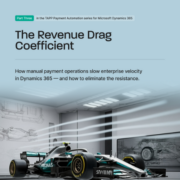
The Revenue Drag Coefficient: Part 2 in the TAPP Payment Automation Series for Microsoft Dynamics 365

The Revenue Drag Coefficient: Part 3 in the TAPP Payment Automation Series for Microsoft Dynamics 365

Growth should accelerate your finance function.
Not slow it down.

How manual payment operations slow enterprise velocity in Dynamics 365, and how to eliminate resistance. 

As organisations scale on Microsoft Dynamics 365 Finance, complexity increases across entities, geographies, and payment providers. What often goes unnoticed is how manual payment operations introduce a growing layer of resistance, slowing down financial processes, distorting visibility, and consuming valuable team capacity.

This eBook introduces the concept of the “revenue drag coefficient”, the cumulative friction created by manual reconciliation, fragmented payment data, delayed cash application, and integration overhead. It explains why this drag scales geometrically with enterprise growth, why common approaches such as native connectors, custom integrations, and external platforms fail to eliminate it, and where it most heavily impacts finance teams.

It then outlines what enterprise-grade payment infrastructure should look like inside Dynamics 365 Finance: multi-entity by design, fully automated across the entire payment lifecycle, and natively embedded within the ERP. The result is a finance function that moves faster, closes quicker, and scales without operational resistance.

Download the eBook to uncover the hidden “drag” inside Dynamics 365 Finance and how to eliminate it.

The Cash Flow Leak: Part 2 in the TAPP Payment Automation Series for Microsoft Dynamics 365

The Cash Flow Leak: Part 2 in the TAPP Payment Automation Series for Microsoft Dynamics 365

You’re already collecting the cash.
The question is what it’s costing you.

Why establish businesses on Business Central pay too much to collect what they’re already owed.

For many businesses running Microsoft Dynamics 365 Business Central, payment collection works, but at a cost that grows quietly with scale. Behind every successful payment sits a chain of manual steps: generating payment requests, reconciling payouts, accounting for fees, and recovering failed transactions.

This eBook explores the concept of the “cash flow leak”, the hidden operational and financial cost of collecting what you are already owed. It breaks down where that cost accumulates, why it often goes unnoticed, and how common approaches such as single-provider connectors or multiple integrations fail to resolve it.

It then outlines what a fully “sealed” payment system should look like in Business Central, and how organisations can eliminate manual effort, improve cash flow, and scale without increasing the cost of collection.

Download the eBook to uncover the hidden cost of payment processes in Business Central and how to eliminate it.

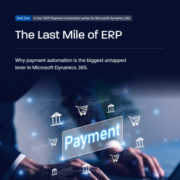
The Last Mile of ERP: Why Payment Automation Matters in Dynamics 365

The Last Mile of ERP: Part 1 in the TAPP Payment Automation Series for Microsoft Dynamics 365

ERP stops at the invoice. Cash doesn’t. Why Payment Automation Matters in Dynamics 365

Microsoft Dynamics 365 is designed to unify operations and financial data, yet one critical gap remains: the journey from invoice to cash. In many organisations, this “last mile” is still manual, fragmented, and outside the ERP, creating delays, reconciliation effort, and limited visibility over actual cash position.

This eBook explores why this gap persists across Dynamics 365 environments, the hidden operational and financial costs it introduces, and why common approaches like connectors, external platforms, or custom builds fail to fully solve it. It also outlines what a complete payment automation strategy should look like and how organisations can close the gap to achieve true end-to-end financial control.

Download the eBook to see how payment automation closes the gap in Dynamics 365 and turns invoices into cash, automatically.

Agentic AI at Work Inside Business Central

Agentic AI at Work Inside Business Central

Recurring revenue is growing. Operational complexity is growing faster.

Subscriptions, usage-based pricing, renewals, mid-term changes, payments, Business Central handles transactions well, but recurring revenue demands continuous intelligence.

This eBook shows how to transform Business Central into an intelligent recurring revenue engine using:

  • Structured, end-to-end subscription operations

  • AI-powered contract and change handling

  • Embedded payment orchestration

  • Unified revenue insight across ERP and CRM

Move beyond manual workarounds and fragile customisation.

Introduce Agentic AI into your revenue lifecycle, without replacing your ERP.

The Invisible Tax of Technical Debt

The Invisible Tax of Technical Debt

Business Central is live. Dataverse is connected. Data flows well enough to keep operations moving.

But integration shortcuts come at a cost.

Partial syncs, fragile flows, custom extensions, and manual reconciliations quietly build technical debt across your Microsoft stack. At first, it feels manageable. A quick fix. A delayed sync. A small workaround.

Over time, it compounds.

As you add new revenue models, Power Platform apps, ISVs, and automation, integration friction becomes structural. Delivery slows. Margins tighten. Change becomes expensive.

This eBook reframes integration not as a connector problem, but as technical debt with compound interest.

Inside, you will learn:

  • Why the Microsoft ecosystem has outgrown traditional integration assumptions

  • How shortcuts become architectural liabilities

  • Where integration friction impacts finance and operations

  • Why AI and Copilot amplify weak foundations

  • The principles that prevent technical debt from forming

For Microsoft Partners and SMB leaders running Business Central and Dataverse who want scalable, future-ready architecture.

The Energy RevOps Blueprint

The Energy RevOps Blueprint: Linking Customer, Asset, Billing & Service Operations

The Energy RevOps Blueprint is a strategic guide for energy providers transitioning from one-off installations to asset-driven, subscription and usage-based revenue models. As solar, heat pumps, EV charging, batteries, and smart-home solutions scale, operational complexity grows, and fragmented systems quickly lead to inefficiencies, billing errors, and revenue leakage.

This ebook explains how to unify customer contracts, installation workflows, asset management, smart-meter and telemetry data, billing, and financial operations into a single Energy RevOps architecture. Built on Microsoft Dynamics 365 Finance & Supply Chain Management and enhanced by Bluefort’s LISA Enterprise, the blueprint shows how energy providers can achieve end-to-end visibility, automate recurring and consumption-based billing, improve operational throughput, and maintain audit-ready financial accuracy at scale.

Through practical examples and real-world scenarios, the guide provides a clear framework for building a scalable, future-ready operating model that supports growth, compliance, and exceptional customer experiences across markets.

Download the ebook to learn how a unified RevOps foundation can help you scale with confidence, control, and predictable revenue.

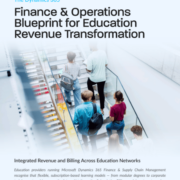
The Dynamics 365 Blueprint for Education Revenue Transformation

Modern education providers are evolving fast, but legacy finance systems haven’t kept up. This in-depth Blueprint reveals how leading institutions are transforming Dynamics 365 Finance & Supply Chain Management into a connected, compliant, and scalable RevOps engine.

Discover how LISA Enterprise extends native Dynamics 365 capabilities to automate revenue recognition, intercompany processes, and audit-ready reporting across multi-campus, multi-currency operations.

Learn how universities and training networks are achieving:

  • 75% fewer manual reconciliations

  • 5–7 day faster month-end close

  • 99% billing accuracy

  • 80% less audit prep time

Download your free Blueprint and see how your finance team can move from compliance to predictive insight, with unified revenue operations built for the future of education.